

Introduction
If you have ever cooked a meal in a Dubai kitchen during summer without proper ventilation, you know how quickly the space can become uncomfortable. Heat, steam, cooking odors and smoke can build up rapidly, making your kitchen unpleasant and potentially unhealthy. This is where a ventilation fan in the kitchen becomes essential. In this comprehensive guide, we will walk you through everything you need to know about kitchen ventilation solutions, from understanding why they matter to choosing the right kitchen exhaust fan Dubai residents trust. Whether you are renovating your villa, upgrading an apartment or designing a commercial kitchen, this article will help you make informed decisions about kitchen air flow systems that work best for UAE conditions.
Why Proper Kitchen Ventilation Matters in Dubai
Dubai’s climate presents unique challenges for home ventilation. With outdoor temperatures regularly exceeding 40°C during summer months, indoor cooking generates additional heat that can make kitchens unbearable. But temperature control is just one reason why proper ventilation is critical.
Health and Safety Concerns
When you cook, especially with gas stoves common in UAE homes, combustion produces carbon monoxide and nitrogen dioxide. Without adequate ventilation, these gases accumulate to potentially harmful levels. Grease particles, smoke and steam also carry pollutants that affect indoor air quality. Over time, poor ventilation can contribute to respiratory issues, allergies and general discomfort for your family.
Moisture and Humidity Control
Cooking generates significant moisture through boiling, steaming and general food preparation. In Dubai, where air conditioning runs constantly, this moisture can create condensation problems when warm, humid air meets cold surfaces. This leads to mold growth on walls and ceilings, damaged paint and an unhealthy living environment. A properly functioning ventilation fan in the kitchen removes moisture before it causes these problems.
Odor Management
Strong cooking smells from spices, fried foods or grilled meats can spread throughout your home and linger in fabrics, carpets and furniture. This is particularly challenging in open-plan layouts popular in modern UAE apartments and villas. Effective kitchen ventilation captures odors at the source, preventing them from permeating your entire living space.
Grease and Dirt Accumulation
Without proper exhaust systems, airborne grease particles settle on kitchen surfaces, cabinets and appliances. This creates sticky, difficult-to-clean residue that damages finishes over time. Professional-grade ventilation systems filter these particles before they spread, keeping your kitchen cleaner and reducing maintenance efforts.
Understanding Different Types of Kitchen Ventilation Systems
Choosing the right kitchen ventilation solutions starts with understanding the options available and how they work in Dubai’s building environment.
Ducted Exhaust Systems
Ducted systems, also known as vented range hoods, connect to external ductwork that carries contaminated air outside your home. These are generally the most effective option because they completely remove heat, moisture and pollutants rather than recirculating them.
How They Work: When you turn on the fan, it pulls air through filters that trap grease particles. The cleaned but still contaminated air then travels through ducts and exits through an external vent, usually on your building’s exterior wall or roof.
Best For: Villas with accessible exterior walls, ground-floor apartments and any kitchen where ductwork installation is feasible. This is the preferred solution for serious home cooks and anyone concerned about optimal air quality.
Considerations in Dubai: Building regulations in some developments may restrict external ductwork or require specific approval. Always check with your property management or building authority before installation.
Recirculating Systems
Recirculating ventilation fans, sometimes called ductless range hoods, filter air and return it to the kitchen rather than exhausting it outside. They use charcoal or carbon filters to remove odors and grease filters to trap particles.
How They Work: Air passes through metal mesh filters that capture grease, then through activated carbon filters that absorb odors and some gases. The filtered air then circulates back into your kitchen.
Best For: High-rise apartments where ducting to the exterior is impossible or prohibited, rentals where you cannot modify building structure and situations where installation cost is a primary concern.
Limitations: While better than no ventilation, recirculating systems do not remove heat or moisture, only filtering out some pollutants and odors. They require frequent filter replacement to maintain effectiveness.
Wall-Mounted Exhaust Fans
Simple wall-mounted fans installed in exterior walls provide basic ventilation by pulling air directly outside. These are separate from your cooking hood and typically mounted near the ceiling.
How They Work: The fan creates negative pressure that draws air from the kitchen toward the exterior opening. A one-way damper prevents outside air from entering when the fan is off.
Best For: Supplementing existing range hoods, providing general kitchen ventilation beyond cooking times and budgets where comprehensive systems are not feasible.
UAE Application: Particularly useful in traditional villa layouts where kitchens have external walls. Less effective in modern apartment towers where kitchens are typically interior spaces.
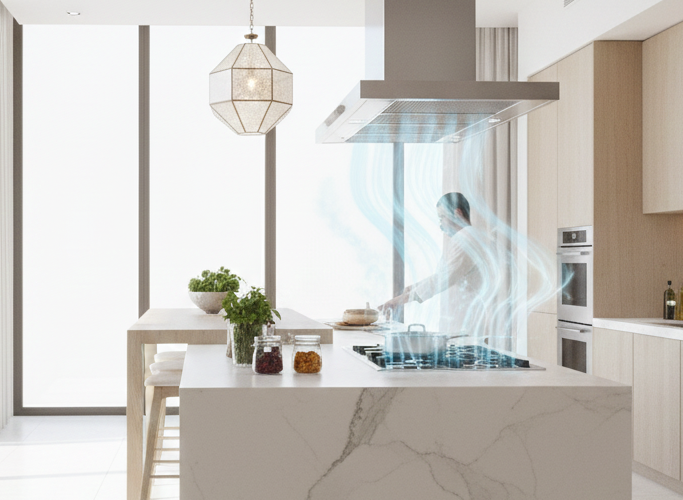
Island Range Hoods with Downdraft Systems
For kitchens with cooking islands, specialized ventilation options include ceiling-mounted hoods or downdraft systems built into the countertop.
How They Work: Ceiling hoods function like wall-mounted versions but hang from the ceiling above your island cooktop. Downdraft systems rise from the counter when needed and pull air downward before ducting it away.
Best For: Modern open-plan kitchens where the cooking area is not against a wall, luxury villas with custom kitchen designs.
Installation Considerations: These systems typically require more complex ducting and professional installation to ensure adequate suction power over the longer distances involved.
Key Features to Look for in Kitchen Exhaust Fan Dubai Systems
When selecting a kitchen exhaust fan Dubai suppliers offer, several technical specifications determine how well the system will perform in your specific situation.
Airflow Capacity (CFM)
Measured in cubic feet per minute (CFM), this indicates how much air the fan moves. The general rule suggests 100 CFM for every linear foot of cooking surface. For Dubai kitchens with gas cooktops or heavy cooking habits, err on the higher side. A typical residential kitchen needs between 300-600 CFM, while commercial kitchens require significantly more.
Noise Levels
Measured in sones (a unit of perceived loudness), quieter fans operate at 1-3 sones, while noisier units may reach 6-8 sones. In open-plan homes common in Dubai, quieter operation becomes more important as kitchen noise carries to living areas. Look for fans with multiple speed settings so you can adjust noise levels based on cooking intensity.
Filter Types and Accessibility
Grease filters trap oil particles and require regular cleaning. The best systems use multi-layer stainless steel baffle filters that are dishwasher-safe and highly effective. Mesh filters are less expensive but harder to clean thoroughly. For recirculating systems, check the cost and availability of replacement carbon filters.
Motor Quality and Durability
Premium motors with ball bearings last longer and operate more quietly than cheaper alternatives. Given Dubai’s year-round air conditioning and the importance of reliable ventilation, investing in quality motors pays off through extended lifespan and consistent performance.
Lighting
Most modern range hoods include task lighting to illuminate your cooking surface. LED lights provide bright, energy-efficient illumination and generate minimal heat, which is important in already-warm kitchens.
Controls and Features
Basic models offer simple on/off switches, while advanced systems include variable speed controls, automatic sensors that detect heat or smoke, timer functions and even smart home integration. Consider which features genuinely improve your cooking experience versus which add unnecessary complexity and cost.
Installation Considerations for Kitchen Air Flow Systems
Proper install kitchen fan procedures ensure optimal performance and longevity. Several factors specific to UAE buildings affect installation planning.
Building Regulations and Approvals
Dubai Municipality and individual emirate authorities have specific regulations governing ventilation systems, particularly regarding fire safety and building modifications. Always verify:
- Whether your building allows external ducting
- Required fire dampers in ductwork
- Noise restrictions that might affect fan selection
- Civil defense approval for ventilation equipment
Ductwork Design
For ducted systems, duct routing significantly impacts performance. Shorter, straighter duct runs with minimal bends provide better airflow. Each 90-degree turn in ductwork reduces effectiveness by approximately 25 CFM. Use smooth, rigid metal ducting rather than flexible ribbed ducts whenever possible, as smooth surfaces create less air resistance.
Makeup Air Requirements
Powerful exhaust systems remove large volumes of air from your home. This creates negative pressure that must be replaced, particularly in newer, tightly sealed buildings. Without adequate makeup air, your ventilation fan may struggle to achieve rated performance, and you might experience backdrafting where contaminated air is pulled back into living spaces. Professional installers assess whether additional ventilation is needed to balance your system.
Electrical Requirements
Ensure your electrical system can support your chosen ventilation fan. Most residential units operate on standard voltage, but high-capacity systems may require dedicated circuits. Always use qualified electricians familiar with UAE electrical codes.
Height and Positioning
Install range hoods 65-75 cm above gas cooktops and 55-65 cm above electric or induction surfaces. Position the hood to cover the entire cooking surface, extending slightly beyond on all sides for optimal capture.
Maintenance and Care
Investing in the best kitchen ventilation UAE systems available means little if you don’t maintain them properly. Regular care ensures continued performance and extends system life.
Regular Cleaning Schedule
Grease Filters: Clean every 2-4 weeks depending on cooking frequency. Most stainless steel filters are dishwasher-safe, making this task simple. For hand washing, use hot water with degreasing dish soap.
Exterior Surfaces: Wipe down hood surfaces weekly to prevent grease buildup. Use mild cleaners suitable for your hood’s material, whether stainless steel, painted metal or glass.
Fan Blades and Motor Housing: Every 3-6 months, check for grease accumulation on internal components. Professional cleaning may be necessary for thorough maintenance.
Filter Replacement
For recirculating systems, replace carbon filters every 3-6 months, or more frequently if you cook heavily with strong-smelling ingredients. Keep spare filters on hand so you can change them promptly when effectiveness diminishes.
Professional Servicing
Annual professional inspection ensures your system operates safely and efficiently. Technicians can:
- Check motor function and bearing condition
- Inspect ductwork for blockages or damage
- Verify proper airflow rates
- Test safety features like fire dampers
- Clean areas homeowners cannot easily access
Warning Signs of Problems
Contact professionals if you notice:
- Reduced suction power
- Unusual noises during operation
- Persistent odors despite cleaning
- Visible grease accumulation despite regular filter cleaning
- Motor overheating or burning smells
Kitchen Fan Maintenance: Extending System Life in Dubai Conditions
Dubai’s unique environment, with high temperatures, occasional sand and dust storms and high humidity in coastal areas, places specific demands on kitchen ventilation systems.
Dust Protection
External vents should include appropriate screens or dampers to prevent dust infiltration during sandstorms. Clean these components regularly to maintain airflow.
Corrosion Prevention
In coastal areas, salt air can corrode metal components. Stainless steel systems offer better longevity than painted finishes. Apply protective coatings to exposed ductwork as recommended by manufacturers.
Temperature Considerations
Ductwork exposed to outdoor conditions experiences extreme temperature variations. Ensure proper insulation to prevent condensation issues and maintain duct integrity.
Choosing Professional Installation Services
While some homeowners attempt DIY installation, professional services offer significant advantages, particularly for complex systems or situations requiring building modifications.
What Professional Services Provide
- Site assessment and system recommendation based on your specific kitchen layout
- Handling building approvals and regulatory compliance
- Proper ductwork design and installation
- Electrical work by licensed electricians
- Testing to verify system achieves rated performance
- Warranty protection that often requires professional installation
Questions to Ask Potential Installers
- How long have you specialized in kitchen ventilation?
- Can you provide references from similar projects?
- What brands and systems do you recommend for Dubai conditions?
- Do you handle all necessary approvals?
- What warranty do you offer on installation work?
- Do you provide ongoing maintenance services?
Conclusion
At Rapid Cool, we understand that every kitchen and every building in Dubai has unique ventilation needs. Our team of experienced professionals can assess your space, recommend appropriate kitchen air flow systems, handle all installation requirements and provide ongoing maintenance to keep your ventilation working perfectly for years to come. We work with trusted brands approved by UAE authorities and have extensive experience with both residential and commercial kitchen ventilation projects.
Don’t let poor ventilation compromise your kitchen experience and your family’s health. Contact Rapid Cool today for expert consultation on the best kitchen ventilation UAE solutions for your home or business. Let us help you create a comfortable, healthy kitchen environment that makes cooking a pleasure, not a chore.
