
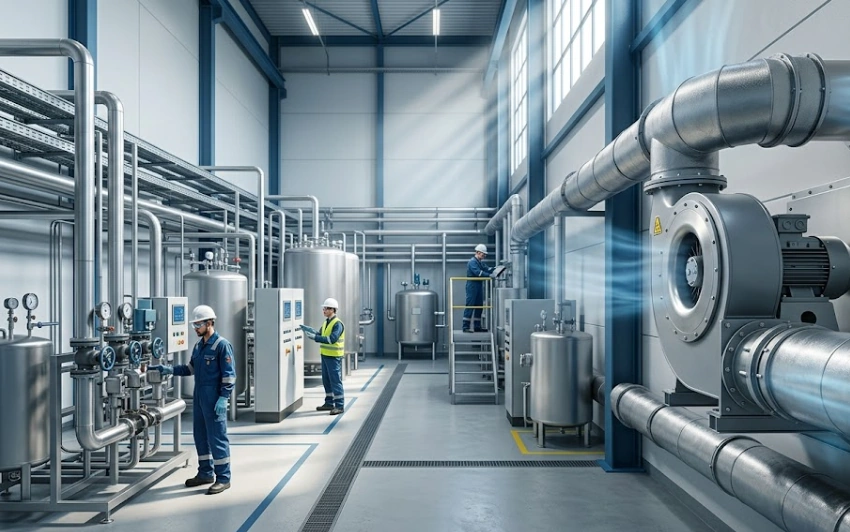
Industrial environments often involve processes that generate combustible gases, flammable vapors, explosive dust, or volatile chemicals. In these settings, standard ventilation equipment may not provide the level of protection required to operate safely. This is where Explosion Proof Fans become essential. Designed specifically for hazardous environments, these specialized ventilation systems help reduce the risk of ignition while maintaining proper airflow and air quality.
Whether you’re managing a manufacturing plant, chemical processing facility, oil and gas site, pharmaceutical unit, or paint booth, understanding how ATEX Fans work is critical to creating a safer workplace. Choosing the right fan is not only about meeting operational requirements, but it is also about protecting employees, equipment, and the facility itself.
In this guide, we’ll explain everything you need to know about Explosion Proof Fans, how ATEX Fans differ from standard industrial fans, their applications, and why they are a vital part of effective Hazardous Area Ventilation and Industrial Ventilation Systems.
What Are Explosion Proof Fans?
Despite the name, Explosion Proof Fans are not designed to withstand an explosion after it occurs. Instead, they are engineered to prevent the fan itself from becoming the source of ignition in environments where explosive atmospheres may exist.
These fans are manufactured using specialized materials, spark-resistant components, and certified motors that minimize the risk of generating sparks or excessive heat during operation. By reducing potential ignition sources, they play a key role in maintaining safe working conditions.
An Explosion Proof Exhaust Fan is commonly installed in areas where flammable gases, combustible dust, or volatile vapors are regularly present and where continuous ventilation is required.
Understanding ATEX Fans
ATEX Fans are ventilation systems designed to comply with the European ATEX Directive, which establishes safety requirements for equipment intended for use in potentially explosive atmospheres.
ATEX certification ensures that equipment has been designed, tested, and manufactured to reduce ignition risks when operating in hazardous locations.
These fans are commonly selected for facilities that handle:
- Flammable gases
- Chemical vapors
- Solvents
- Combustible dust
- Petroleum products
- Industrial powders
Choosing certified ATEX Fans helps organizations comply with international safety standards while improving operational reliability.
Why Hazardous Areas Require Specialized Ventilation
In many industrial facilities, normal operations can produce airborne substances capable of creating explosive atmospheres.
Examples include:
- Chemical mixing
- Fuel storage
- Spray painting
- Grain handling
- Pharmaceutical manufacturing
- Wood processing
- Metal finishing
Without proper Hazardous Area Ventilation, these combustible particles or vapors can accumulate over time.
If an ignition source is introduced, even something as small as an electrical spark, the results can be catastrophic.
Specialized ventilation continuously removes contaminated air, reducing the concentration of hazardous substances before they reach dangerous levels.
How Explosion Proof Fans Work
The primary purpose of Explosion Proof Fans is to move contaminated air safely without creating ignition risks.
Several design features make this possible.
Spark-Resistant Construction
Fan blades and internal components are manufactured from materials that minimize friction and reduce spark generation.
This is especially important in facilities where airborne flammable substances are present.
Explosion-Protected Motors
Unlike conventional motors, explosion-proof motors are designed to contain any internal electrical ignition that might occur.
This prevents sparks from escaping into the surrounding atmosphere.
Temperature Control
These fans are engineered to operate within safe temperature limits, preventing excessive heat buildup that could ignite combustible materials.
Sealed Electrical Components
Critical electrical parts are enclosed to prevent hazardous gases or dust from reaching potential ignition sources.
Together, these features allow Explosion Proof Exhaust Fan systems to operate safely in demanding industrial environments.
Common Applications of Explosion Proof Fans
Many industries depend on certified ventilation equipment to maintain safe operating conditions.
Oil and Gas Facilities
Fuel handling and hydrocarbon processing generate flammable vapors that require continuous ventilation.
Chemical Manufacturing Plants
Chemical reactions often produce hazardous gases that must be safely extracted.
Paint Spray Booths
Solvent-based paints release combustible vapors that require efficient ventilation.
Pharmaceutical Manufacturing
Certain pharmaceutical powders and solvents create potentially explosive atmospheres.
Food Processing Facilities
Fine organic dust generated during flour, sugar, or grain handling can become combustible under specific conditions.
Battery Manufacturing
Hydrogen gas released during charging operations requires reliable hazardous area ventilation.
Benefits of Explosion Proof Fans
Installing the right ventilation solution offers several long-term operational advantages.
Improved Workplace Safety
The primary benefit is reducing ignition risks in hazardous work environments.
This helps protect employees, equipment, and surrounding infrastructure.
Regulatory Compliance
Using certified ATEX Fans helps facilities meet applicable industry safety requirements and inspection standards.
Reliable Airflow
Proper ventilation improves indoor air quality by continuously removing hazardous airborne contaminants.
Equipment Protection
Reducing airborne chemicals and dust also helps protect machinery from contamination and premature wear.
Increased Operational Confidence
Reliable Industrial Ventilation Systems allow facilities to maintain production while prioritizing workplace safety.
Explosion Proof Exhaust Fan vs Standard Exhaust Fan
Although both types of fans perform ventilation functions, their construction and intended applications are very different.
Standard Exhaust Fans
Standard fans are suitable for:
- Offices
- Warehouses
- Residential buildings
- Commercial spaces
- General industrial ventilation
They are not designed for explosive atmospheres.
Explosion Proof Exhaust Fan
An Explosion Proof Exhaust Fan is specifically engineered for hazardous environments where combustible gases, vapors, or dust may be present.
Its construction reduces ignition risks while maintaining reliable airflow under challenging operating conditions.
Choosing the appropriate fan depends entirely on the working environment rather than airflow requirements alone.
Factors to Consider Before Selecting Explosion Proof Fans
Every industrial application has unique ventilation requirements.
Before selecting Explosion Proof Fans, consider several important factors.
Hazard Classification
Identify whether the environment contains gases, vapors, or combustible dust.
The hazard classification determines the appropriate equipment certification.
Airflow Requirements
Calculate the airflow needed to maintain effective ventilation throughout the workspace.
Proper sizing ensures efficient contaminant removal.
Environmental Conditions
Temperature, humidity, chemical exposure, and outdoor conditions all influence equipment selection.
Fan Material
Corrosion-resistant materials may be necessary for chemically aggressive environments.
Installation Location
Determine whether the fan will operate indoors, outdoors, on rooftops, or within duct systems.
Proper installation supports long-term performance.
The Role of Industrial Ventilation Systems
While individual fans play an important role, they are most effective when integrated into well-designed Industrial Ventilation Systems.
A complete ventilation system may include:
- Supply air fans
- Exhaust fans
- Air filtration units
- Ductwork
- Air balancing controls
- Monitoring systems
Together, these components create balanced airflow that improves both safety and operational efficiency.
Proper system design ensures hazardous substances are removed consistently while maintaining comfortable working conditions.
Maintenance Tips for Explosion Proof Fans
Even high-quality equipment requires routine maintenance to operate safely.
Inspect Moving Components
Regular inspections help identify wear before failures occur.
Clean Fan Blades
Dust accumulation may reduce airflow efficiency over time.
Check Electrical Connections
Qualified technicians should periodically inspect electrical systems for signs of wear or damage.
Verify Airflow Performance
Reduced airflow may indicate blockages or mechanical issues requiring attention.
Follow Manufacturer Recommendations
Scheduled maintenance supports reliable operation and extends equipment lifespan.
Preventive maintenance is particularly important in hazardous environments where equipment reliability directly affects workplace safety.
Why Professional Ventilation Planning Matters
Selecting an explosion-proof fan involves much more than choosing the correct airflow capacity. Every hazardous environment presents unique risks that require careful evaluation of gas classifications, dust hazards, ventilation rates, equipment compatibility, and applicable safety standards.
Working with experienced ventilation specialists helps ensure that the selected equipment integrates properly into the overall Industrial Ventilation Systems, providing effective Hazardous Area Ventilation while supporting long-term operational safety. Professional planning also helps reduce costly installation errors, improve system efficiency, and simplify future maintenance.
Conclusion
Hazardous industrial environments demand ventilation solutions that go beyond ordinary airflow. Explosion Proof Fans, ATEX Fans, and properly designed systems play a critical role in reducing ignition risks, improving air quality, and supporting safe operations in facilities where combustible gases, vapors, or dust are present. Choosing the right ventilation equipment not only enhances workplace safety but also contributes to regulatory compliance, operational reliability, and long-term equipment performance.
If you’re looking for dependable hazardous area ventilation solutions tailored to your industrial requirements, Rapid Cool provides high-performance ventilation products engineered for demanding environments. From certified ATEX Fans to complete Industrial Ventilation Systems, our team can help you select the right solution for your application. Contact us today to explore reliable ventilation systems designed to keep your facility operating safely and efficiently.