

Introduction
In high-density urban developments, noise pollution isn’t limited to external sources; it often originates within the building itself. Sounds such as rushing water, water hammer vibrations, and HVAC mechanical hum can significantly impact occupant comfort.
Pipe acoustic lagging is a specialized engineering solution designed to control these disturbances, ensuring that mechanical systems remain effective without being audible.
What Is Pipe Acoustic Lagging?
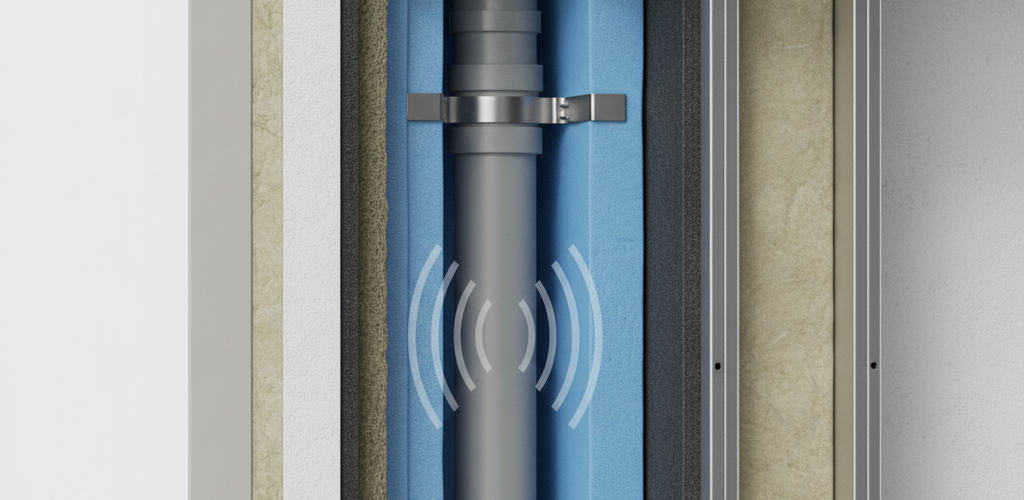
Pipe acoustic lagging is a multi-layered insulation system applied around internal pipework.
Unlike standard thermal insulation, which focuses only on temperature control, acoustic lagging is specifically engineered to:
- Block airborne noise
- Reduce structural vibration
- Minimize sound transmission through walls and floors
How Pipe Acoustic Lagging Works: The “Mass–Barrier” Principle
Effective acoustic lagging operates through a three-stage mechanical process:
1. Decoupling (The Spacer Layer)
- An inner layer of convoluted foam or mineral wool
- Separates the vibrating pipe from the outer barrier
- Prevents direct transmission of structural vibration
2. Sound Blocking (The Mass Layer)
- A dense outer layer, typically Mass Loaded Vinyl (MLV)
- Acts as a noise shield
- Reflects and blocks sound waves from escaping
3. Sound Absorption
- Porous inner materials trap sound energy
- Converts sound into negligible heat
- Reduces resonance within wall cavities
Why Construction Leaders Prioritize Acoustic Lagging
1. Compliance With Building Codes
- Mandatory decibel (dB) limits in many regions
- Essential for wastewater and rainwater pipe compliance
- Supports green building and sustainability standards
2. High-Performance Living & Working Environments
Residential Buildings
- Eliminates flushing and drainage noise near living spaces
Healthcare Facilities
- Supports patient recovery by maintaining quiet environments
Hotels & Hospitality
- Improves guest satisfaction and star-rating benchmarks
3. Protection of Property Value
- Noise-free buildings are perceived as higher quality
- Enhances marketability and long-term asset value
- Prevents costly retrofitting after construction
Common Applications of Pipe Acoustic Lagging
Acoustic lagging is particularly critical for:
- PVC Wastewater Pipes
- Lightweight construction amplifies noise transmission
- Rainwater Downpipes
- High-impact noise during heavy rainfall
- HVAC Ducting
- Prevents breakout noise from high-velocity airflow
Professional Installation: The Key to Effectiveness
Even minor installation errors can compromise acoustic performance. Small gaps may cause noise leakage and reduce the system’s overall sound reduction rating (Rw).
Best-Practice Installation Guidelines
- Overlap All Joints
- Minimum 50 mm overlap on longitudinal and radial joints
- Seal With Acoustic Foil Tape
- Ensures airtightness and prevents sound escape
- Special Attention to Bends & T-Joints
- High-impact noise zones
- Require meticulous wrapping with no material thinning
Conclusion: Designing for the Ears, Not Just the Eyes
While modern architecture often emphasizes visual appeal, true building quality is defined by acoustic comfort. Pipe acoustic lagging is a critical investment that transforms functional structures into premium, tranquil spaces.
Integrating acoustic lagging during construction ensures compliance, comfort, and long-term value, delivering buildings that are not only seen but quietly experienced.
